Low Back Pain
Low Back Pain: Your Guide to Calming It Down and Getting Back to Life
Low back pain is one of the most common reasons people see a doctor, and the large majority of cases improve with time and the right movement. This guide explains what is going on, how to calm a flare-up, and how we build your back back up.
The most important thing to understand: your back is strong, built to move, and gets better with activity, not rest. Pain is a protective alarm, not a measure of damage.
WHAT IS GOING ON
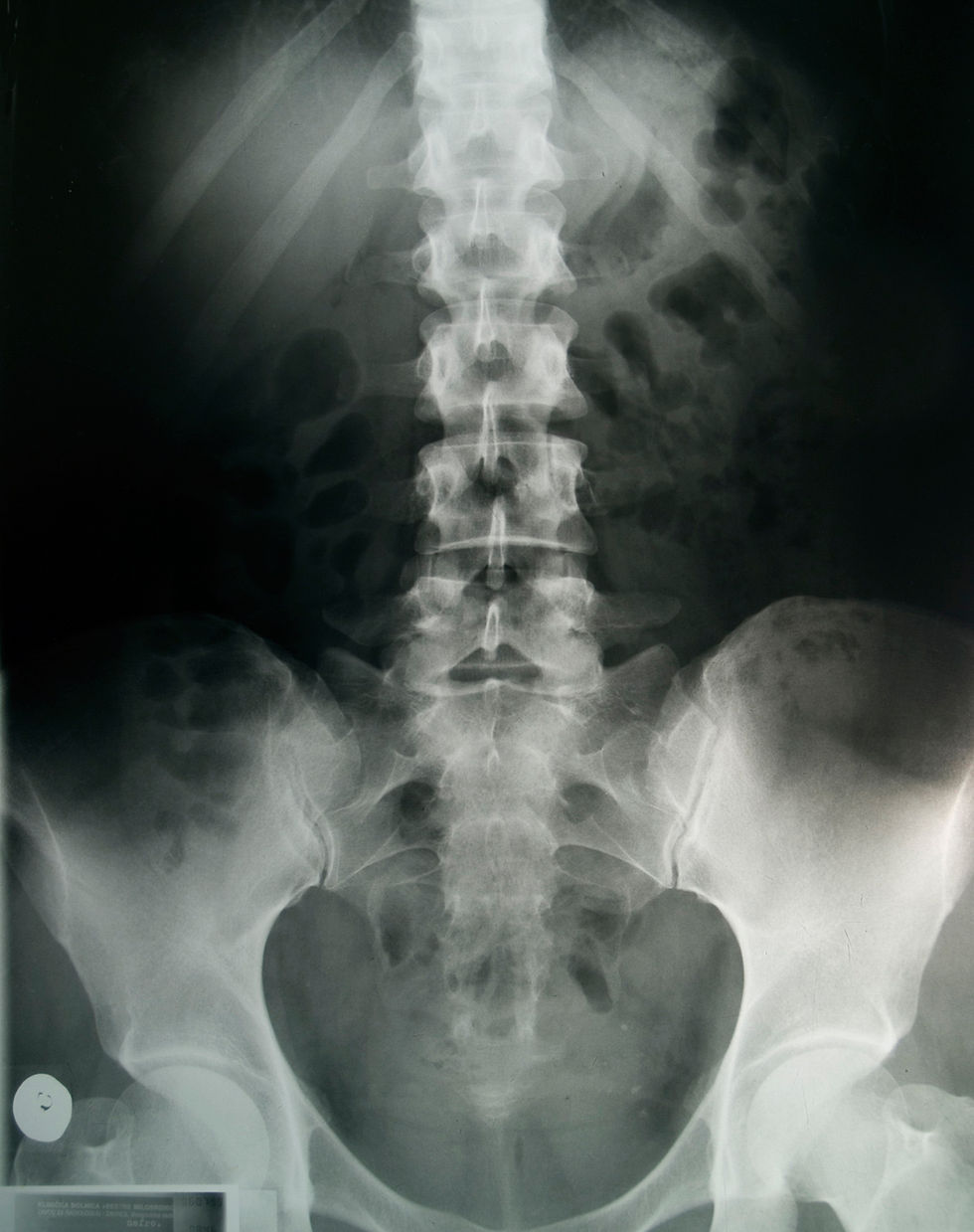
Five large bones (vertebrae) stack in your low back, cushioned by discs and guided by small facet joints. Layers of muscles wrap around the spine like a natural brace. Most low back pain comes from these tissues becoming irritated or overloaded, and from a nervous system that has turned up its sensitivity. In most cases, no single structure can be blamed, and that is okay: the plan to get better is the same.
Old thinking
What we know now
Back pain means my spine is damaged.
Most back pain means the area is irritated, sensitive, or overloaded, not damaged.
Rest in bed until it stops hurting.
Bed rest usually makes back pain last longer. Gentle movement speeds recovery.
An MRI will show what is wrong.
Disc wear and arthritis show up on scans of many people with no pain at all.
I should avoid bending forever.
Your spine is built to bend. We rebuild confidence and strength so you can do it again.
Is my spine damaged? Usually not. In a large research review of people with no back pain, disc wear showed up in about 1 in 3 people in their 20s and over 9 in 10 people in their 80s. A scan finding does not, by itself, explain your pain or predict your future.
YOUR LOW BACK AT A GLANCE
Vertebrae
the bony building blocks (L1 to L5)
Discs
shock-absorbing cushions between the bones
Facet joints
small joints at the back that guide movement
Muscles
support and move the spine
Nerves
exit the spine and travel to the buttocks and legs
SIGNS IT IS COMMON LOW BACK PAIN
- An ache or stiffness across the low back, sometimes into the buttocks.
- Pain that changes with position: worse with long sitting, standing, or bending, and better with moving.
- Stiffness in the morning that loosens as you get going.
- No major weakness, numbness, or problems with bladder or bowels.
WHY IT HAPPENS
Low back pain usually comes from a mix of load and sensitivity. When the back does more than it is ready for, or when stress and poor sleep turn up the nervous system, the area becomes sore and protective. Common contributors:
- Lifting, bending, or twisting more than usual
- Long hours of sitting or standing still
- A jump in activity: yard work, moving, a new workout
- Poor sleep, stress, and fatigue
- Low overall fitness or recent inactivity
- Fear of movement, which leads to guarding and stiffness
THE PAIN-GUARDING CYCLE
Pain makes us guard and move less. Guarding makes the back stiffer and weaker, which makes it more sensitive and more painful. Gentle movement, walking, and gradual strengthening break this cycle. The amount of pain does not equal the amount of damage.
WHAT KIND OF BACK PAIN IS IT?
Most low back pain falls into one of a few patterns. The good news: the core plan of movement and strength helps all of them.
Mechanical low back pain
The most common type. Pain changes with position and activity, and there is no nerve pain down the leg. It usually improves steadily over weeks.
Back pain with leg symptoms
Pain, tingling, or numbness that travels into the buttock or leg can mean a nerve is irritated. It still usually improves, but let us know so we can tailor your plan.
Term you might see
What it means in plain language
Bulging disc
The disc spreads slightly past its normal edge. Very common, and often found in people with no pain.
Herniated disc
Some inner disc material pushes out and may irritate a nerve, causing leg pain (sciatica). Most improve on their own over weeks to months.
Spinal stenosis
Narrowing of the spaces nerves travel through. Leg heaviness with walking that eases when you sit or lean forward.
Bone spurs
Small bony edges the body builds around joints over time. A normal part of aging.
Back pain
→
Guard and move less
↑
↓
More sensitive to movement
←
Stiffer, weaker back
THE PAIN RULE: YOUR GUIDE FOR EVERY DAY
Some discomfort during your exercises and daily activity is OK, and is often part of getting better. The key is how your back responds the next morning. Use this guide after exercise, work, and activity.
GREEN LIGHT — KEEP GOING
0–3 / 10 discomfort
- Pain stays at or below 3 out of 10 during activity.
- Your back settles back to its usual level within an hour or two.
- Your morning check-in is the same or better the next day.
Action: Keep going. Progress when your therapist says you are ready.
YELLOW LIGHT — MODIFY
4–5 / 10 discomfort
- Pain goes above 3 out of 10 during activity.
- Your back is stiffer or more sore the next morning.
- Your morning check-in is a little worse than the day before.
Action: Do a little less for a day or two (fewer reps, less time, lighter load) and tell your therapist. Do not stop moving completely.
RED LIGHT — STOP AND BACK OFF
6 / 10 or greater
- Pain keeps rising during or after activity.
- Next-morning pain is clearly worse and not settling.
- Pain wakes you at night, or new numbness, tingling, or weakness travels down your leg.
Action: Stop the activity, go back to the previous stage of your program, and contact your therapist.
Your daily check-in: each morning, as you get up and start moving, rate your back from 0 to 10. This number is your best guide to whether yesterday's activity was right.
YOUR RECOVERY PLAN: THREE STAGES
Your program calms things down first, then restores movement, then builds strength. You move forward based on how your back responds, not the calendar. When you add a new stage, keep doing some of the earlier exercises.
STAGE 1 Calm It Down
Usually the first few days
Goal: Settle pain and keep gently moving. Bed rest usually makes back pain last longer.
- Keep moving gently. Short walks every 1 to 2 hours, even 5 minutes. Change positions often.
- Use heat or ice for 15 to 20 minutes, whichever feels better, with a towel between your skin and the pack.
- Rest positions: on your back with pillows under your knees, or on your side with a pillow between your knees.
- Avoid heavy lifting and long periods of sitting for now.
Belly Breathing
- Lie on your back with knees bent. Rest one hand on your belly.
- Breathe in slowly through your nose and let your belly rise.
- Breathe out slowly and let your muscles soften.
5 to 10 slow breaths, 2 to 3 times a day
Calms the nervous system and helps guarding muscles let go.
Pelvic Tilt
- Lie on your back with knees bent and feet flat.
- Gently flatten your low back into the floor by tightening your belly.
- Hold, then relax. Keep breathing.
10 repetitions, 3-second hold, 2 to 3 times a day
Knee Rocks (Lower Trunk Rotation)
- Lie on your back with knees bent and together.
- Slowly let both knees fall to one side, only as far as comfortable.
- Return to center, then go to the other side.
10 each side, slow and rhythmic, 2 to 3 times a day
Single Knee to Chest
- Lie on your back with knees bent.
- Hold behind one thigh and gently pull that knee toward your chest.
- Feel a gentle stretch in your low back or buttock. Switch legs.
3 times each leg, 20 to 30-second hold
Holding behind the thigh is easier on the knee.
You move on when: you can walk around your home and change positions with pain at 3/10 or less, and your morning check-in is improving.
STAGE 2 Restore Movement
Usually days 3 to 14
Goal: Get your back moving freely again. Keep your Stage 1 exercises and add these once a day.
Cat-Cow
- Start on hands and knees, hands under shoulders, knees under hips.
- Slowly round your back up toward the ceiling, tucking your chin.
- Then gently let your back relax and sag, only in a comfortable range.
10 slow repetitions
If arching bothers you, focus on the rounding.
Child's Pose
- From hands and knees, sit your hips back toward your heels.
- Reach your arms forward and let your back relax.
- Breathe slowly. Use a pillow under your hips or chest if needed.
3 times, 20 to 30-second hold
Skip if you have knee problems; use Knee to Chest instead.
Walking
- Walk on flat ground at a comfortable pace with relaxed arms.
- Start with what feels easy (even 5 minutes).
- Add 1 to 2 minutes every few days.
Build toward 20 to 30 minutes daily
Regular walking is one of the best things you can do for your recovery.
You move on when: your Stage 2 exercises stay at 3/10 or less, and morning stiffness settles quickly once you get moving.
STAGE 3 Build Strength
Usually 2 to 6 weeks
Goal: Make the muscles that support your spine strong so it is ready for everything you want to do.
Bridge
- Lie on your back, knees bent, feet flat and hip-width apart.
- Tighten your belly and squeeze your glutes, then lift your hips.
- Lift until your body forms a straight line. Lower slowly.
10 repetitions, 3 to 5-second hold, once a day
Strong hips and glutes support your back, hips, and knees.
- Add Bird Dog (8 to 10 each side) and a modified plank as your therapist directs.
- Keep walking daily and work toward 20 to 30 minutes.
- Return to your normal activities step by step, using the Pain Rule to guide you.
You move on when: you meet the Back-to-Normal Checklist below and your physical therapist clears you.
Flare-ups happen, and they are normal. If your back flares up again, it does not mean you are back at square one. Go back to Stage 1 for a few days, then work forward again. Each time, you will know more about how to manage it.
EVERYDAY DO'S AND DON'TS
Do
Do not
Stand up and move every 30 to 45 minutes. Your best posture is your next posture.
Sit for hours without a break, or stay in bed all day.
Lift with the load close to your body; bend at hips and knees and turn with your feet.
Twist while lifting, or lift heavy loads during a flare.
Stop every hour on long drives to walk for a few minutes.
Push through long car rides without breaks.
Sleep with a pillow under or between your knees.
Sleep on a heating pad.
Get out of bed with the 'log roll': onto your side, legs off the edge, push up with your arms.
Sit straight up from lying flat when your back is sore.
Use relaxed breathing, walks, and activities you enjoy to manage stress.
Hold your breath and brace through every movement.
HOW LONG WILL IT TAKE?
Most low back pain improves a lot within a few days to a few weeks. These are typical ranges.
Situation
Typical time
Notes
First episode
A few days to 6 weeks
Most improvement comes early with gentle movement.
Back pain with leg symptoms
6 to 12 weeks
Nerve symptoms often settle more slowly but usually do settle.
Repeat episodes
Varies
Strength, fitness, and staying active make flares less frequent and shorter.
OTHER TREATMENTS: WHERE THEY FIT
Movement is the main treatment. Anything else is judged by one question: does it help you move more?
Treatment
What to know
Heat or ice
Use whichever helps you move more. Heat often eases stiffness; ice often calms a sore, swollen, or recently strained area. 15 to 20 minutes, with a towel between your skin and the pack.
Over-the-counter medicine
Ask your doctor or pharmacist which are safe for you, especially with stomach, kidney, liver, or heart problems or blood thinners. Works best when it helps you move more.
Injections
Your doctor may offer an injection for stubborn nerve pain. It works best paired with an exercise program.
Complete rest
Not recommended beyond short breaks. Too much rest usually makes stiffness and weakness worse.
SEE A DOCTOR OR GO TO THE ER RIGHT AWAY IF
- You have new trouble controlling your bladder or bowels, or cannot urinate.
- You have numbness in the groin, inner thighs, or 'saddle' area (where you would sit on a bike seat).
- You have leg weakness that is getting worse, or foot drop (toes catching or dragging).
- You have back pain with fever, chills, or feel very sick, or pain after a significant fall or accident.
Contact Your Doctor or Physical Therapist Soon If
- Pain is not improving after 2 to 4 weeks, or keeps getting worse.
- Pain wakes you at night and does not ease when you change positions.
- Numbness, tingling, or pain spreads further down your leg.
- You have a history of cancer, unexplained weight loss, osteoporosis, or long-term steroid use.
COMMON QUESTIONS
Do I need a scan?
Usually not. Scans are recommended when symptoms suggest something more serious or are not improving as expected.
Should I stop exercising?
Usually not completely. Keep moving within the Pain Rule. Your exercises and daily walks are part of the treatment.
Heat or ice?
Use whichever feels better and helps you move more.
Will it come back?
It can, and that is normal. Staying active and strong is the best protection, and you will know how to manage it.
BACK-TO-NORMAL CHECKLIST
You and your therapist should be able to check most or all of these boxes before you are discharged to your home program:
☐ I can walk 20 to 30 minutes with pain at 3/10 or less.
☐ My morning check-in is stable or improving week to week.
☐ I can sit, stand, and drive for my usual amounts of time.
☐ I can bend and lift everyday items using good habits.
☐ I can do my Stage 1 to 3 exercises at 3/10 or less, settling by the next morning.
☐ I know my long-term home program and will keep doing it.
☐ I know what to do if my back flares up, and I know the warning signs.
☐ I feel confident, not fearful, using my back.
THE GOAL
The goal of rehab for low back pain is not just a back that hurts less. It is a back that is strong and confident enough for everything your life asks of it.
Keep it moving, don't rest it. Build up gradually, and let your morning check-in, not the calendar, decide when you move forward.
Your back is built to move. Give it the right amount, consistently.
This handout is general patient education and does not replace individualized medical advice. Timelines are typical ranges. Your physical therapist's instructions always take priority, and your plan of care is determined by your physical therapist based on your symptoms, goals, and response to treatment. Contact your physical therapist with any questions. Imaging statistics: Brinjikji W, et al. AJNR Am J Neuroradiol. 2015;36(4):811-816.
Dr. Joshua Griffith, PT, DPT, CSCS
Doctor of Physical Therapy · Certified Strength & Conditioning Specialist
Show Me PT · Grosse Pointe Woods, Michigan · 313-799-3869