Lumbar Arthritis
Lumbar Arthritis (Spondylosis): Your Guide to Moving Comfortably With a Stiff Back
Arthritis of the low back is very common as we age. It can cause stiffness and aching, but it responds well to movement and strength. This guide explains what is going on, how to calm a flare-up, and how we keep your back strong.
The most important thing to understand: motion is lotion: arthritic joints feel better when they move regularly. Your X-ray does not decide what you can do.
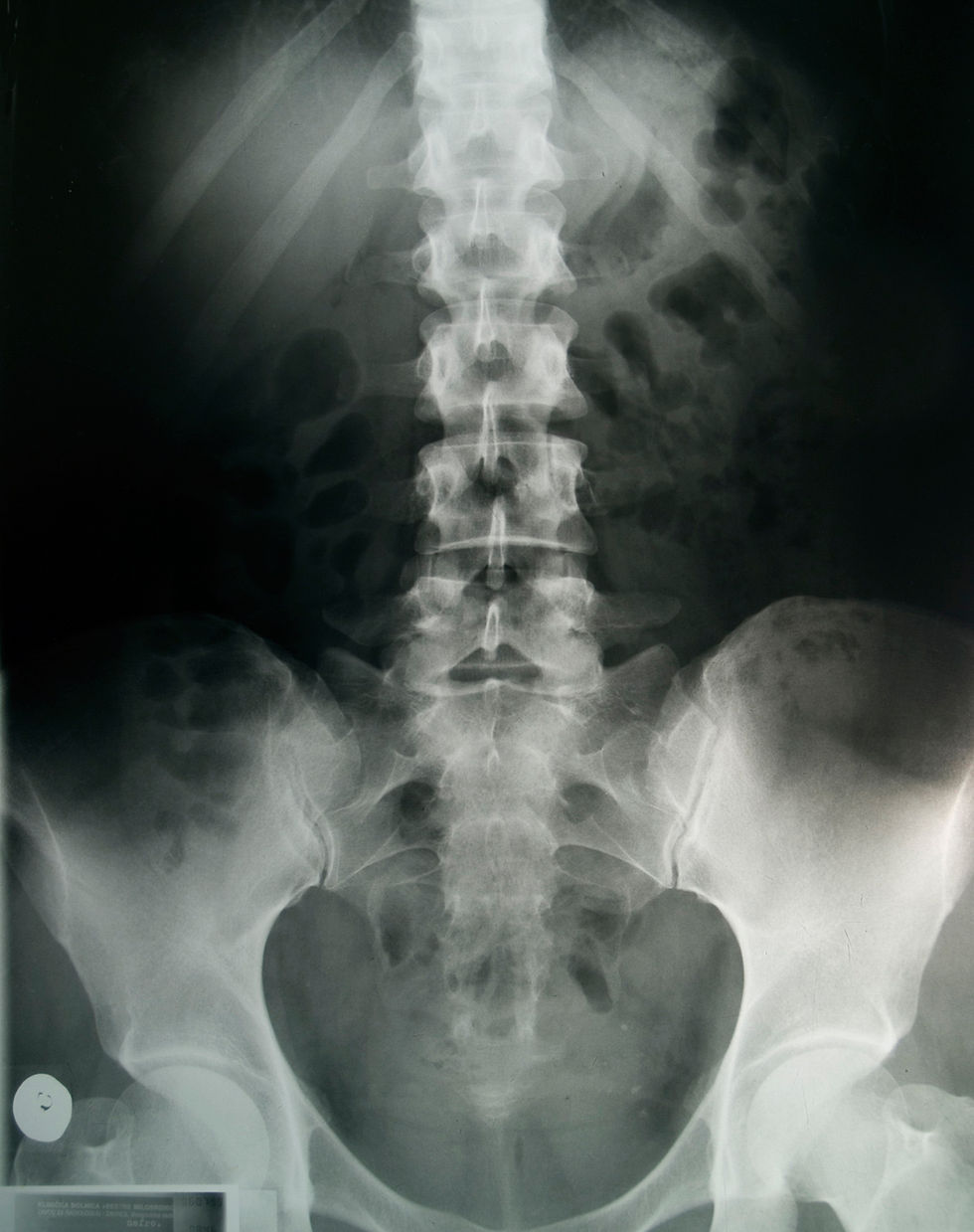
WHAT IS GOING ON
At the back of each spinal level are two small facet joints that guide movement. Like knees and hips, these joints can develop arthritis: the cartilage thins and small bone spurs form. This can make the back stiff, especially in the morning, and sore with long standing or arching backward. Strong muscles and regular movement take pressure off these joints.
Old thinking
What we know now
Arthritis means my back is worn out.
Arthritis changes are common and often stable. Many people stay very active.
I should rest my back to protect the joints.
Joints stay healthier with regular movement and strength.
My X-ray shows how bad my pain will be.
X-ray changes often do not match pain levels.
Exercise will wear my spine out faster.
Exercise is one of the best treatments for spinal arthritis.
Is my spine damaged? Usually not. In a large research review of people with no back pain, disc wear showed up in about 1 in 3 people in their 20s and over 9 in 10 people in their 80s. A scan finding does not, by itself, explain your pain or predict your future.
YOUR LOW BACK AT A GLANCE
Vertebrae
the bony building blocks (L1 to L5)
Discs
shock-absorbing cushions between the bones
Facet joints
small joints at the back that guide movement
Muscles
support and move the spine
Nerves
exit the spine and travel to the buttocks and legs
SIGNS IT IS LUMBAR ARTHRITIS
- Morning stiffness that loosens within about 30 minutes of moving.
- Aching with standing a long time or arching backward.
- Relief with sitting or bending slightly forward.
- Stiffness after being still, like getting out of the car.
WHY IT HAPPENS
Spinal arthritis develops slowly over years. It tends to flare when the back is overloaded or stiff. Common contributors:
- Age and family history
- Past back injuries
- Long periods of standing or arching
- Weak trunk and hip muscles
- Extra body weight
- Inactivity and long periods of sitting
THE STIFFNESS CYCLE
Stiff joints make us move less. Moving less makes the joints stiffer and the muscles weaker, so everything feels harder. Daily movement and strength training break this cycle.
WHICH PART OF MY BACK?
Arthritis often occurs alongside disc changes. The same plan helps both.
Facet joint arthritis
Pain with standing, arching backward, or twisting, and relief with sitting or bending slightly forward.
Arthritis with stenosis
If bone spurs narrow the nerve spaces, you may feel leg heaviness with walking that eases when you sit or lean on a cart.
Term you might see
What it means in plain language
Bulging disc
The disc spreads slightly past its normal edge. Very common, and often found in people with no pain.
Herniated disc
Some inner disc material pushes out and may irritate a nerve, causing leg pain (sciatica). Most improve on their own over weeks to months.
Spinal stenosis
Narrowing of the spaces nerves travel through. Leg heaviness with walking that eases when you sit or lean forward.
Bone spurs
Small bony edges the body builds around joints over time. A normal part of aging.
Stiff, sore joints
→
Move less
↑
↓
Activity feels harder
←
Stiffer joints, weaker muscles
THE PAIN RULE: YOUR GUIDE FOR EVERY DAY
Some discomfort during your exercises and daily activity is OK, and is often part of getting better. The key is how your back responds the next morning. Use this guide after exercise, work, and activity.
GREEN LIGHT — KEEP GOING
0–3 / 10 discomfort
- Pain stays at or below 3 out of 10 during activity.
- Your back settles back to its usual level within an hour or two.
- Your morning check-in is the same or better the next day.
Action: Keep going. Progress when your therapist says you are ready.
YELLOW LIGHT — MODIFY
4–5 / 10 discomfort
- Pain goes above 3 out of 10 during activity.
- Your back is stiffer or more sore the next morning.
- Your morning check-in is a little worse than the day before.
Action: Do a little less for a day or two (fewer reps, less time, lighter load) and tell your therapist. Do not stop moving completely.
RED LIGHT — STOP AND BACK OFF
6 / 10 or greater
- Pain keeps rising during or after activity.
- Next-morning pain is clearly worse and not settling.
- Pain wakes you at night, or new numbness, tingling, or weakness travels down your leg.
Action: Stop the activity, go back to the previous stage of your program, and contact your therapist.
Your daily check-in: each morning, as you get up and start moving, rate your back from 0 to 10. This number is your best guide to whether yesterday's activity was right.
YOUR RECOVERY PLAN: THREE STAGES
Your program calms things down first, then restores movement, then builds strength. You move forward based on how your back responds, not the calendar. When you add a new stage, keep doing some of the earlier exercises.
STAGE 1 Calm It Down
Usually the first few days of a flare
Goal: Settle the flare and keep the joints moving gently.
- Keep moving gently. Short walks through the day; use a cart or walking poles if standing upright is hard.
- Use heat for 15 to 20 minutes to ease stiffness.
- Rest positions: on your back with knees bent, or on your side with a pillow between your knees. A slight forward bend often feels better.
- Avoid long standing and repeated arching backward for now.
Belly Breathing
- Lie on your back with knees bent. Rest one hand on your belly.
- Breathe in slowly through your nose and let your belly rise.
- Breathe out slowly and let your muscles soften.
5 to 10 slow breaths, 2 to 3 times a day
Calms the nervous system and helps guarding muscles let go.
Pelvic Tilt
- Lie on your back with knees bent and feet flat.
- Gently flatten your low back into the floor by tightening your belly.
- Hold, then relax. Keep breathing.
10 repetitions, 3-second hold, 2 to 3 times a day
Single Knee to Chest
- Lie on your back with knees bent.
- Hold behind one thigh and gently pull that knee toward your chest.
- Feel a gentle stretch in your low back or buttock. Switch legs.
3 times each leg, 20 to 30-second hold. Holding behind the thigh is easier on the knee.
Knee Rocks (Lower Trunk Rotation)
- Lie on your back with knees bent and together.
- Slowly let both knees fall to one side, only as far as comfortable.
- Return to center, then go to the other side.
10 each side, slow and rhythmic, 2 to 3 times a day
You move on when: you can walk and change positions with pain at 3/10 or less, and morning stiffness is easing.
STAGE 2 Restore Movement
Usually weeks 1 to 3
Goal: Get your back moving freely. Keep your Stage 1 exercises and add these once a day.
Cat-Cow
- Start on hands and knees, hands under shoulders, knees under hips.
- Slowly round your back up toward the ceiling, tucking your chin.
- Then gently let your back relax and sag, only in a comfortable range.
10 slow repetitions
If arching bothers you, focus on the rounding.
Child's Pose
- From hands and knees, sit your hips back toward your heels.
- Reach your arms forward and let your back relax.
- Breathe slowly. Use a pillow under your hips or chest if needed.
3 times, 20 to 30-second hold
Skip if you have knee problems; use Knee to Chest instead.
Walking or Stationary Bike
- Walk on flat ground or ride a stationary bike at an easy pace.
- A slight forward lean on a bike is often comfortable with arthritis.
- Add a few minutes every few days.
Build toward 20 to 30 minutes daily
Regular aerobic activity is one of the best treatments.
You move on when: your Stage 2 exercises stay at 3/10 or less, and stiffness settles quickly once you get moving.
STAGE 3 Build Strength
Usually 3 to 8 weeks
Goal: Build the trunk and hip strength that takes pressure off the joints.
Bridge
- Lie on your back, knees bent, feet flat and hip-width apart.
- Tighten your belly and squeeze your glutes, then lift your hips.
- Lift until your body forms a straight line. Lower slowly.
10 repetitions, 3 to 5-second hold, once a day
Strong hips and glutes support your back, hips, and knees.
- Add Bird Dog and Sit to Stand as your therapist directs.
- Keep walking or biking and work toward 30 minutes.
- Return to normal activities step by step.
You move on when: you meet the Back-to-Normal Checklist below and your physical therapist clears you.
Flare-ups happen, and they are normal. If your back flares up again, it does not mean you are back at square one. Go back to Stage 1 for a few days, then work forward again. Each time, you will know more about how to manage it.
EVERYDAY DO'S AND DON'TS
Do
Do not
Stand up and move every 30 to 45 minutes. Your best posture is your next posture.
Sit for hours without a break, or stay in bed all day.
Lift with the load close to your body; bend at hips and knees and turn with your feet.
Twist while lifting, or lift heavy loads during a flare.
Stop every hour on long drives to walk for a few minutes.
Push through long car rides without breaks.
Sleep with a pillow under or between your knees.
Sleep on a heating pad.
Get out of bed with the 'log roll': onto your side, legs off the edge, push up with your arms.
Sit straight up from lying flat when your back is sore.
Use relaxed breathing, walks, and activities you enjoy to manage stress.
Hold your breath and brace through every movement.
HOW LONG WILL IT TAKE?
Arthritis flares usually settle within days to weeks, and strength builds over a few months.
Situation
Typical time
Notes
Flare-up settling
A few days to 3 weeks
Gentle movement and heat help most.
Strength and stiffness gains
6 to 12 weeks
Standing and walking get easier with consistent exercise.
Long-term management
Ongoing
Staying active keeps flares less frequent and shorter.
OTHER TREATMENTS: WHERE THEY FIT
Movement is the main treatment. Anything else is judged by one question: does it help you move more?
Treatment
What to know
Heat or ice
Use whichever helps you move more. Heat often eases stiffness; ice often calms a sore, swollen, or recently strained area. 15 to 20 minutes, with a towel between your skin and the pack.
Over-the-counter medicine
Ask your doctor or pharmacist which are safe for you, especially with stomach, kidney, liver, or heart problems or blood thinners. Works best when it helps you move more.
Injections
Your doctor may offer an injection for stubborn nerve pain. It works best paired with an exercise program.
Complete rest
Not recommended beyond short breaks. Too much rest usually makes stiffness and weakness worse.
SEE A DOCTOR OR GO TO THE ER RIGHT AWAY IF
- You have new trouble controlling your bladder or bowels, or cannot urinate.
- You have numbness in the groin, inner thighs, or 'saddle' area (where you would sit on a bike seat).
- You have leg weakness that is getting worse, or foot drop (toes catching or dragging).
- You have back pain with fever, chills, or feel very sick, or pain after a significant fall or accident.
Contact Your Doctor or Physical Therapist Soon If
- Pain is not improving after 2 to 4 weeks, or keeps getting worse.
- Pain wakes you at night and does not ease when you change positions.
- Numbness, tingling, or pain spreads further down your leg.
- You have a history of cancer, unexplained weight loss, osteoporosis, or long-term steroid use.
COMMON QUESTIONS
Will my arthritis get worse?
Changes progress slowly, but pain and function often improve with exercise. How you feel depends more on strength and activity than on the X-ray.
Why is my back stiff in the morning?
Joints stiffen when still. Gentle movement before getting up and a warm shower often help.
Heat or ice?
Heat is usually best for arthritic stiffness.
Should I stop exercising?
No. Keep moving within the Pain Rule. Exercise is part of the treatment.
BACK-TO-NORMAL CHECKLIST
You and your therapist should be able to check most or all of these boxes before you are discharged to your home program:
☐ I can walk 30 minutes with pain at 3/10 or less.
☐ Morning stiffness settles within about 30 minutes.
☐ I can stand for my usual amount of time.
☐ I can bend and lift everyday items using good habits.
☐ I can do my Stage 1 to 3 exercises at 3/10 or less, settling by the next morning.
☐ I know my long-term home program and will keep doing it.
☐ I know what to do if my back flares up, and I know the warning signs.
☐ I feel confident, not fearful, using my back.
THE GOAL
The goal of rehab for lumbar arthritis is not just a back that hurts less. It is a back that is strong and confident enough for everything your life asks of it.
Keep it moving, don't rest it. Build up gradually, and let your morning check-in, not the calendar, decide when you move forward.
Your back is built to move. Give it the right amount, consistently.
This handout is general patient education and does not replace individualized medical advice. Timelines are typical ranges. Your physical therapist's instructions always take priority, and your plan of care is determined by your physical therapist based on your symptoms, goals, and response to treatment. Contact your physical therapist with any questions. Imaging statistics: Brinjikji W, et al. AJNR Am J Neuroradiol. 2015;36(4):811-816.
Dr. Joshua Griffith, PT, DPT, CSCS
Doctor of Physical Therapy · Certified Strength & Conditioning Specialist
Show Me PT · Grosse Pointe Woods, Michigan · 313-799-3869